Seeing the Black Swan
Before It Arrives
What happens when a product team stops asking "what's next" — and starts asking "what could blindside us from a direction we're not watching?"
Challenge
- No clarity on where the market was heading
- Hidden risks in the product ecosystem
- No tool to see what conventional analysis couldn't
Solution
- 3-hour Social Presencing Theater session
- Systemic modeling of online banking ecosystem
- Surfaced hidden stakeholders and forces
Result
- 3 hours saved 3 months of research
- User fear identified as key design force
- New research lens adopted by the team
The team was deep in building the next generation of online banking. Roadmap defined. Resources allocated. Momentum strong.
But something felt off. The market was shifting in ways that didn't fit the models. The team couldn't name what was coming — only that something was.
The question they brought wasn't tactical. It was: where are the hidden obstacles and resources in the system we're building? What could hit us from a direction we're not watching — and destroy what we're creating?
In Nassim Taleb's terms: where is our Black Swan?
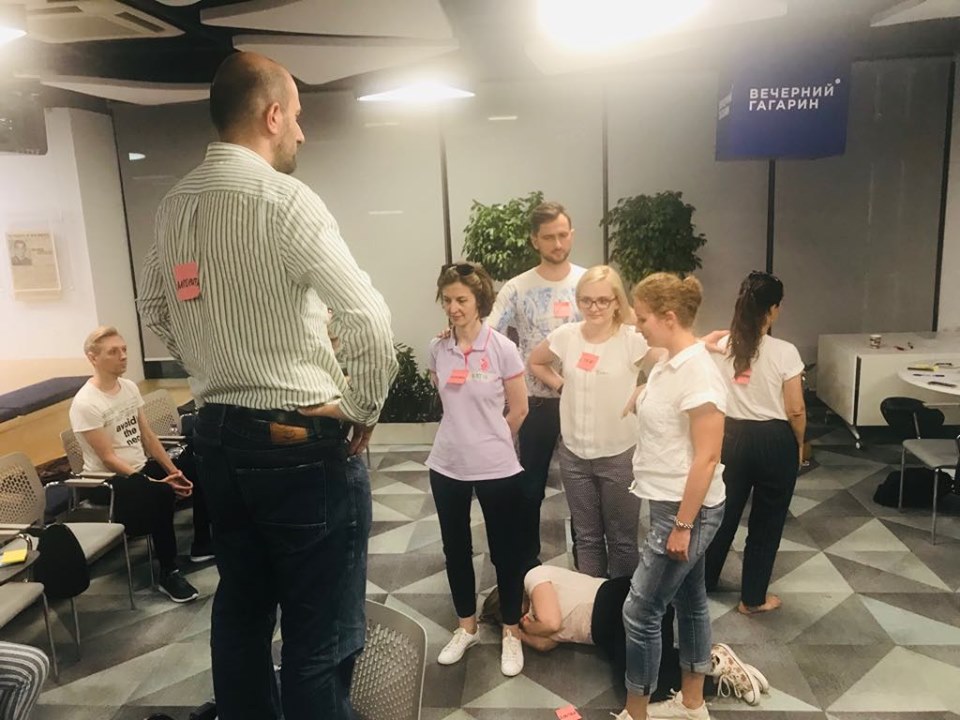
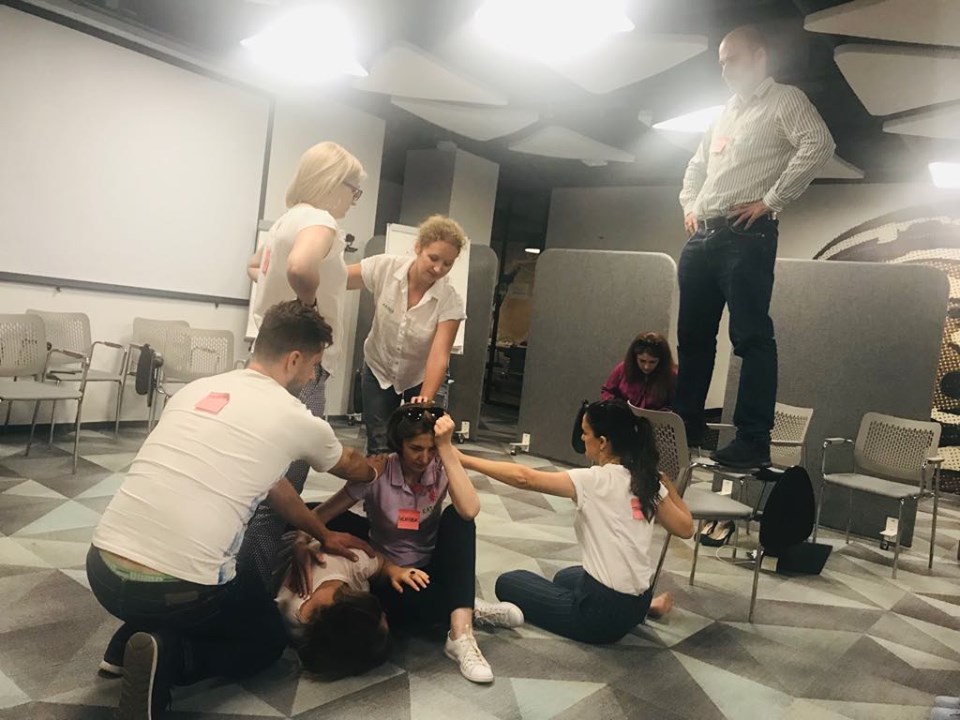
I facilitated a live systemic model of the future of online banking using Social Presencing Theater — an embodied facilitation method developed at MIT's Presencing Institute.
The goal wasn't to analyze online banking in isolation. It was to see it from a wider, systemic view — where banking is just one element inside a larger field of forces. The facilitator identifies which stakeholders matter most for the specific case. In this session the roles were: Human, Technology, Algorithm, Feelings, Earth, Evolution, Fear.
Part of the group embodied these roles. Each person chose by inner resonance — with one critical condition: you don't take a role that belongs to you or that you know well. You step into what is genuinely unfamiliar.
The rest observed from the outside — watching the system move, noticing where energy flowed and where it got stuck.
This isn't theatre. It's a precision instrument. When you inhabit an unfamiliar role, you stop projecting what you already know. Old patterns don't interfere. The system reveals what it actually is — including what's approaching from directions you weren't watching.
What the System Revealed
How this session was structured
System mapping
Together we identified the key forces shaping the future of the product — not just competitors and users, but the deeper systemic players: technology, fear, evolution, sustainability.
Embodied modeling (SPT)
Part of the team stepped into unfamiliar roles and let the system speak through their bodies and impulses. The rest observed. Both groups generated insight the other couldn't.
Harvest and translation
We extracted what the model revealed — patterns, tensions, blind spots — and translated them into concrete strategic implications the team could act on.
"In 3 hours we saved at least 3 months of research — to find what could slow down our product development."Sofia Volokomova — Sberbank Agile Home
The session introduced user fear as a legitimate and necessary research lens — not a friction point to smooth over in UX, but a structural signal to design around.
The team began examining how product language, interface transparency, and design decisions either amplified or reduced user anxiety. It influenced how they thought about user journeys — and how they talked to customers.
"One session didn't change everything.
But it surfaced a Black Swan
the team didn't know was circling."
The insight about user fear and algorithmic dependency is more relevant in 2026 than it was in 2019.
You're building something. You have momentum. Your roadmap makes sense.
But what is your system actually becoming — from the inside? What are the forces in your market, your product, your team that you can't yet name — but that could blindside you?
That's the work.
Something feels off but you can't name it yet?
That's usually where the most important work begins.
Let's talk